The retrospective exhibition of the legendary art, architecture, and design school “The Whole World a Bauhaus” will be presented to Estonian audiences for the first time
27.4.2026
Exhibition
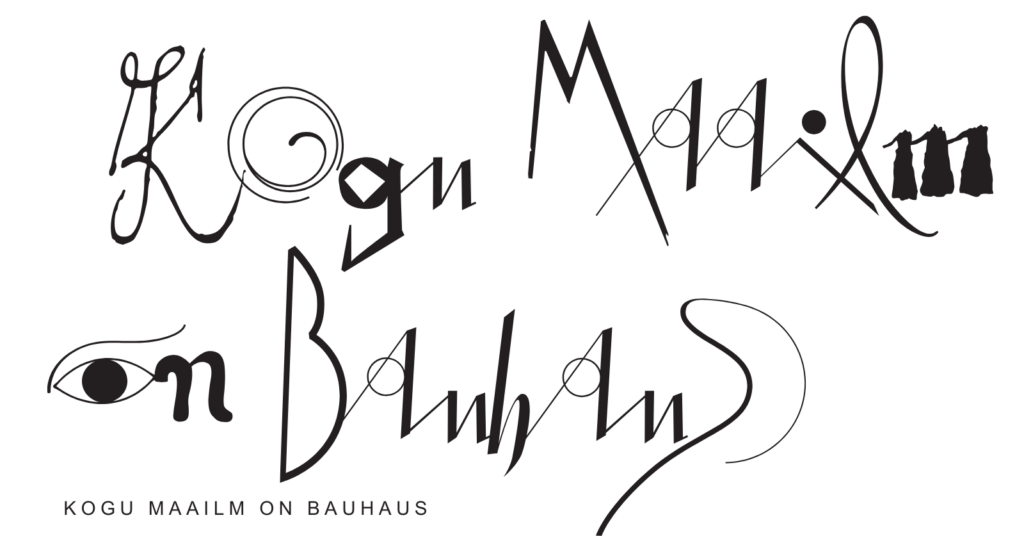
On May 1, the exhibition “The Whole World a Bauhaus” will open at the Estonian Museum of Applied Art and Design.
The exhibition “The Whole World a Bauhaus” presents a diverse, engaging, and surprising insight into the work and life of the Bauhaus art school through eight thematic chapters. It focuses on one of the most important art schools of the 20th century, founded in 1919 in Weimar.
Through photographs, original drawings, models, documents, films, and objects, the exhibition invites visitors to explore the wide scope and versatility of Bauhaus modernist design theory and practice. This is reflected in architecture, everyday objects, painting, and theatre, as well as in its teaching methods and formats. The aim of Bauhaus was to create a better everyday environment and to promote new ways of living.
During its 14 years of operation, Bauhaus was an institution that constantly redefined and reinvented itself. Its direction was continuously discussed and debated by its three directors—architects Walter Gropius, Hannes Meyer, and Ludwig Mies van der Rohe—as well as by Bauhaus masters and students.
Both within and outside the school, the goals and significance of Bauhaus were always subject to discussion and debate, and this continues to this day.
The exhibition is curated by Boris Friedewald.
The exhibition is organized in collaboration with the Goethe-Institut.
Graphic design by HIT STUDIO and Helene Vetik.
The exhibition title is based on a 1928 quote by Fritz Kuhr. Kuhr studied at Bauhaus from 1923 to 1927, worked in the mural painting workshop from 1928 to 1929, and taught drawing at Bauhaus from 1929 to 1930.
The main exhibition is complemented by a display curated by Boris Friedewald, closely connected to Estonia.
The additional exhibition “Rudolf Paris – A Bauhaus Artist from Estonia” explores the studies in Weimar and the early works of the only Bauhaus student from Estonia. Born in Tartu in 1896, the artist and art historian Paris studied in the Bauhaus mural painting workshop from 1922 to 1925 under the guidance of Oskar Schlemmer and Wassily Kandinsky. He belonged to the student movement KURI, which called for a radical commitment to abstraction, and he played in the revolutionary Bauhaus band.